It’s a Bullish World After All!
Los informes de mercado se publican únicamente en inglés. El resto del sitio sí está disponible en su idioma.

Last week we spent the last days of the week offline as we decided it was time to switch our focus from Dairy to Disney with the family in Disneyland Paris. And even though we were surrounded by the magic and mystery of Donald Duck and Micky Mouse, the bullish tones from the dairy market were so strong that we heard ourselves singing "It's a bullish world after all!" Because looking at the latest trades, the difference between sellers and buyers and the action on futures, we are clearly in the middle of another bullish rally.
During the waiting times on Friday in the lines, we got some messages that most of the bullish momentum still mainly comes from the lack of sellers, while spot demand from export markets still keeps steady. Stocks are now running quickly lower and it seems that due to the steady high price of liquids, commodity production is not meeting the demand of the spot supply.
But why aren't sellers selling?
The biggest question is, why are there so few sellers, even though prices are increasing every day? In the previous months, we saw every time that high prices attracted more sellers, so why aren't we seeing more sellers even though almost all commodities trade at the highest prices we have seen this year? We usually work with two types of sellers, producers and traders, so what do they tell us?
Producers: Waiting for better valorization
Speaking to producers they have very little incentive to sell anything. Producers have already claimed for months to be carrying as little stock as possible as the cost of carry was high and their forecast for pricing was also not that bullish. Therefore most produced commodities that aren't allocated against future contracts have been sold and are in the hands of their customers already. So producers have very little stock they need to sell, but normally they would sell unsold commodities. But for the moment it seems most prefer to sell the milk, SMC or cream as the valorization is much better than the commodities they can make from it, and they have less cost of production and quicker money.
So producers have no stock to sell, and they don't produce any fresh product. In normal markets, producers aim to sell forward some quantities as well, either on futures or in the physical market. But as the valorization of commodities is still below the price they need for farmers to commit milk volumes they have no incentive to sell forward. It seems we are nearing prices for commodities to get producers back to the market, but so far it has been very quiet.
The positive side of the current price rally is that the payout milk price for Q4 and Q1 is expected to remain at a relatively firm level where farmers are able to keep investing in production and we probably will see a steady production pace in the next months.
Traders: Stuck in Spreads and Afraid to short the market.
Traders are a big supplier of volumes in our markets and are usually not afraid to speculate on market movements. But to speculate on a market move up or down they need a certain conviction that prices will go down or go up. With all the uncertainty in the world we see today we notice that most traders are afraid/reluctant to take a view on the market market. The instability in the world is a big concern for economic development. With the war between Ukraine and Russia on the borders of the EU and the war between Israel and Palestina in the Middle East tensions are growing. This is pushing up oil prices, and gas and energy prices are increasing as well. Some fear a repetition of 2022 where the on-farm cost and the cost price for producers skyrocketed. This would suggest commodity prices would need to rise well above today's prices.
High interest rates on the other hand are still cause for concerns for an economic recession and the slow demand we keep hearing from end users seems to confirm the economic headwinds. Traders still have a hard time selling forward, although selling does seem easier than buying, indicating we have a market with more buyers than sellers.
It seems most traders are revising their market view from bearish/stable to stable/bullish. Therefore most traders only want to sell products for further out if they can buy something back. But with the biggest natural seller base still on hold, that seems impossible. So unless producers come back to the market, we expect that traders won't be selling any volumes into the market as well.
So What's Next?
The market dynamics have been as described above for a longer time. We have been writing about the lack of sellers for longer and to have fewer sellers in Q4 isn't that unusual either. In the end, it will still be the balance between supply and demand that is determining the real market price. The lack of buyers from inside the EU since the summer has kept prices relatively low for a long time. Even with high prices for liquids, the markets kept trading within the year range.
But now exports are pulling on Europe to supply short-term product we see that it only take a couple of thousand tonnes to get some movement into the market. If EU buyers start to call and request quotes before the producers need to start calling for bids, we might see this market take off faster and higher than most of us (us included) expected. We have been on the bearish/stable side of the market for a long time, and our bullish view has slowly come. To call for a bullish rally we would first need to see some big buyers from the EU calling, but it seems they will have to within the next 2-3 weeks. It seems unlikely that milk volumes will increase that fast and put pressure on the sellers before we see higher prices.
Más desde la mesa
The Bull, The Bear & The Black Swan 
The Bull, The Bear & The Black Swan
Last week was an intense one. When conflict erupted in the Middle East, the market's first instinct was to buy. Partners moved quickly on available offers, and by Tuesday the GDT had rallied alongside a broad bullish swing across agricultural commodity markets world wide. For a moment, it felt like the market had made up its mind. The second half of the week told a different story.
The Bull, The Bear and the Fairy Dust 
The Bull, The Bear and the Fairy Dust
After another active week of trading and yet another slide in prices, we started preparing this week’s report. But beyond concluding that the market remains bearish, there are countless ways to tell the same story: more milk, more stock, slower demand, lower prices. You know the drill. So this week, we’ll skip the usual summary. Those who know us well know we have two children — Lina and Ollie.
The Five Phases of a Buyers Grief 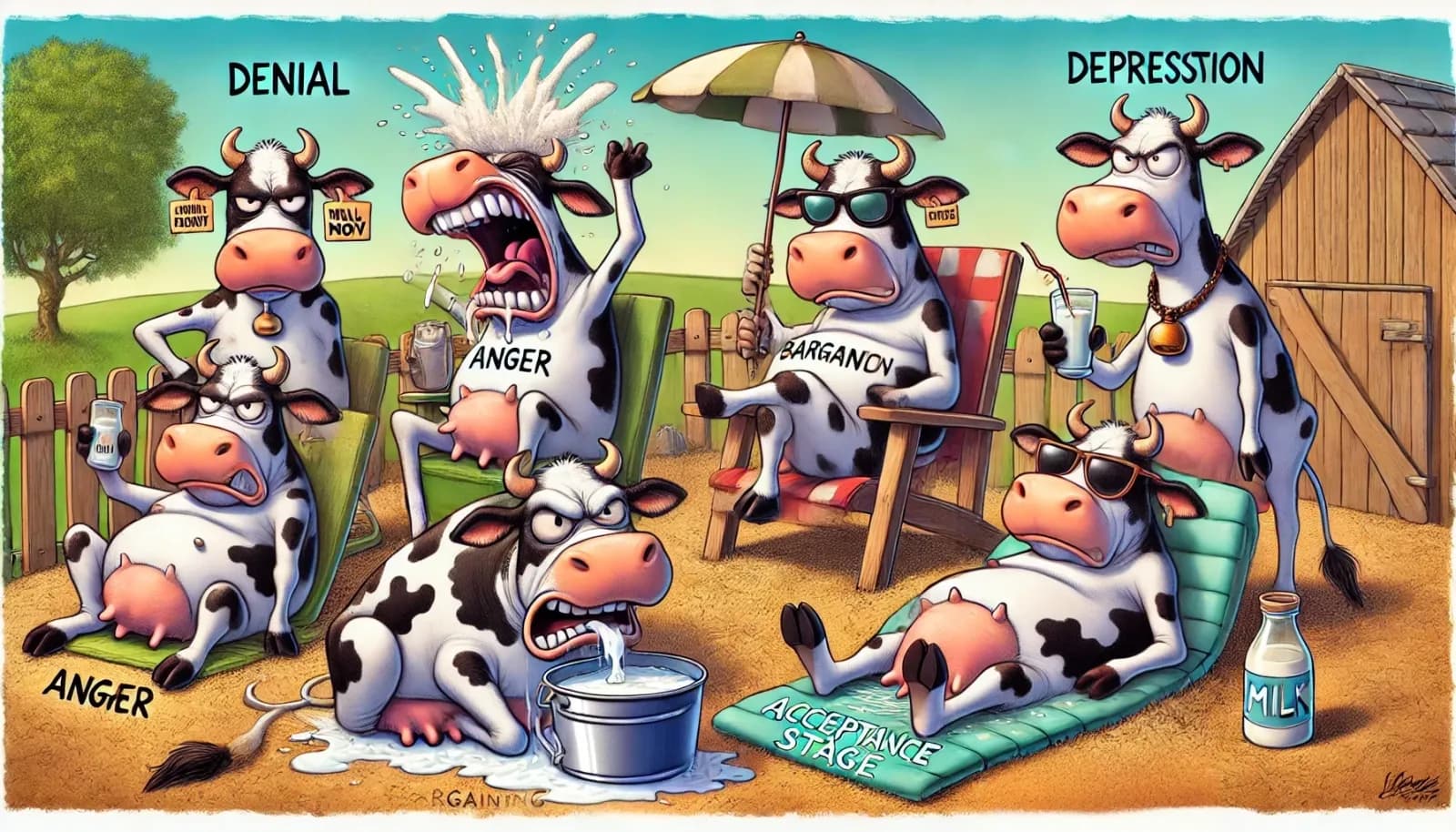
The Five Phases of a Buyers Grief
Yesterday, the market continued its bullish trajectory, driven primarily by surging spot prices for liquid products. With raw milk prices averaging €0.65, SMC prices reaching €2,550, and cream prices breaking records at €10,000 to €10,250, it’s evident that processors are fiercely competing for raw materials. This has left minimal supply available for commodity production.
El informe semanal
Recíbalo antes de que esté en cualquier otro sitio
Cada informe de mercado, directo a su bandeja de entrada en cuanto se escribe. Mantequilla, queso, polvo, líquidos — elija lo que realmente negocia.
Aproximadamente semanal · Gratis · Baja cuando quiera