
Weekly Update Week 2: More Milk (?!)
Los informes de mercado se publican únicamente en inglés. El resto del sitio sí está disponible en su idioma.

The first week of the year passed as quickly as the weeks did the year before. After all the best wishes, the market conversations we had last week returned to the same question it faced in the last weeks of last year; "what is better, supply? or demand?". And the best (but also the most boring) answer seems... we will know in a few months. A few key notes we can distil from last week's conversations seem to paint some similarities compared to last year, but also some changes.
Some buyers are short-covered
It does seem that in some sectors of the market, some buyers are still short-covered. Especially cheese buyers are still looking for this and next week's purchases. These buyers seem to accept that prices need to remain high. We hear Gouda and Edam prices between € 4050 up to € 4150 for closeby. But looking at the market for powders it seems the need for short-term products is non-existent. Butter buyers seem to aim to lock in their winter butter needs, but we see little buying interest for January collection.
Producers are offering
For the first time in a long time, it seems the producers are back at the trading table. Since September it seemed most were sold out for the majority of Q1, but since the new year, we have seen and heard more offers from the producers. It seems a combination of some additional milk intake (higher than expected) and some slower offtake from some buyers is causing the appearance of some additional products. Especially for the butter market, it seems the relatively cheaper cream creates a chance for suppliers to produce some additional churns. But with strong winter butter demand, the market seems to absorb those volumes easily.
Fresh products from producers, old material from the trade
Another trend that seems to continue is that products delivered by producers remain extremely fresh. Cheese is still within the 3-4 week age range (Gouda and Edam) and butter from the producers is all produced within the last weeks. We see hardly any frozen old products appearing from the producers. It supports their claim to be sold out. Even on the market for powders that is struggling to find offtake, it seems producers delivered by producers is hardly a few weeks old. Most suppliers are running a tight schedule and have problems delivering their goods on time.
At the same time, we see older products appearing from the trader's side. Only last week we brokered over a thousand mt of SMP that is more than 18 months old and see more products on offer available from Q2 last year. We have seen the butter around from 2022 and most offered product is located in warehouses where it has been located for months already. Only for the cheese market we also see no old producer located at the traders.
Milk is coming back
Seasonally we always see more milk around this time of year compared to the low milk intake months of September,October and November. Looking at the French and German milk intake they have been dragging the EU milk average volume down since September (the Fench longer). But now their milk intake seems to be getting a boost. This additional unexpected milk needs to find a home, and it usually finds this in commodities like butter, SMP and cheese. If more counties show a similar increase in milk production (v.s. budgets) we might see some additional commodities hitting the markets from February until May.
Demand v.s. Supply.
Those interested in the market price are always looking at the Supply and Demand balance, but it is always hard to make these calculations on the spot. Looking back with the complete market data, prices usually make sense, while at the moment prices might look strange. Looking at the market at this stage it feels the S&D sum is balanced and there is no need to expect major price changes. With the milk intake increasing we would think that the current prices can't really increase from here, although a very strong correction would be surprising for most of our partners. Demand isn't great, but EU internal demand isn't that weak as well. The demand weakness (if it's there) should come from outside the EU. But with the world population growing faster than milk production, the long-term demand threat isn't one to speculate on.
Although proven wrong since our update in December calling for a bearish market, we would still expect the market to correct a bit more from here on all commodities. Our long-term market view remains bullish, but with short-term supply pressure combined with low spot demand from export and high interest rates (stocking cost money), we can't see a bullish market from here. But change is always closer than we expect, so we wouldn't advise anyone to take the risk on the bearish market. We wish you all happy and safe trading for this week.
Más desde la mesa
Our Long View Before Our Long Break 
Our Long View Before Our Long Break
Last week the market found a bit of stability. After lower trades on cheese, the cheese market traded slowly up, although a real rally remains absent. Butter prices did dip a bit further, although at the start of this week we see some strength on the back end of the curve. And on powder, our bullish feeling just doesn't go away — and now we can find some confirmation in the market as well.
Dairy Carry Has a Shelf Life 
Dairy Carry Has a Shelf Life
Last week was bearish across the board — every product we broker leaned the wrong way. Powders lost more momentum, cheese slipped well below €3,000 for some products, and butter continues to impress with just how much keeps showing up. Supply, supply, supply.
Summer Shopping or Summer Sale? 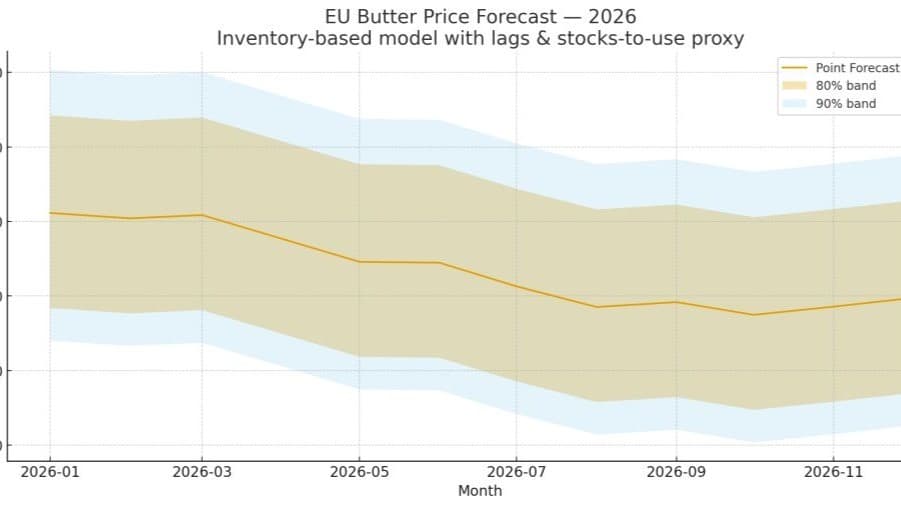
Summer Shopping or Summer Sale?
Last week was again a bit of a bearish week for the entire dairy industry. With cream prices under pressure and milk intake still strong, we keep seeing a market that has more supply than demand. Butter prices took another step lower, cheese prices cracked, and the powder market gave back a bit of its gains again.
El informe semanal
Recíbalo antes de que esté en cualquier otro sitio
Cada informe de mercado, directo a su bandeja de entrada en cuanto se escribe. Mantequilla, queso, polvo, líquidos — elija lo que realmente negocia.
Aproximadamente semanal · Gratis · Baja cuando quiera