The Six Stages of a Dairy Price Cycle
Los informes de mercado se publican únicamente en inglés. El resto del sitio sí está disponible en su idioma.

The dairy market is going through an indiniable bullish phase and we are seeing some familiar patterns that we have seen 6 times earlier in the last 18 months. The first cycles brought the market down a few hundred euros per mt, but in the last months, we have seen the patterns repeat on the same price levels. The market moves within these cycles in a clear range of prices per commodity. This is the first cycle that we see that could maybe break out of this price range, although we think it is a bit early to tell.
Stage One: No Deman (looking for a bottom)
Stage one always starts with no demand. There are no buyers in the market and plenty of sellers. By chasing the buyers with plenty of offers they feel strengthened by the fact they don't buy and prices fall lower and lower. In this stage, people (and we) tend to become too bearish and it almost feels that demand will never rebound. Buyers feel the same sentiment and try to push prices further down.
Stage Two: Buyers start buying (bottom in!)
Once prices hit a certain low point it makes no sense for buyers to wait for even lower prices. We have seen this with butter prices close to € 4000,-, SMP prices close to € 2000 levels and Gouda prices at € 3300. The chance of prices dropping lower becomes so unlikely that most buyers even want to buy a bit more than they need. Stage two normally marks the bottom of the cycle.
Stage Three: Buyers want more (prices increase)
At this point, we see that buyers would like to buy more but sellers are surprised by the amount of bids. Demand apparently wasn't as bad at we all analysed and seller pulled back their offers. Now suddenly we have a market with more buyers and fewer sellers. Some buyers have overplayed their hand and haven't covered all the demand they had. Afraid to have missed the bottom we see higher bids and and the last buyers chase the remaining offers that are out there. Some buyers (usually traders) who bought some extra at the bottom might cash their margins at this stage.
Stage Four: Overshooting (top is in!)
With most sellers out we do not face a shortage of product, but a shortage of sellers. We have explained our view on this in an earlier update. With the last buyers willing to buy something at all cost prices overshoot and hit the high end of the cycle range. For butter in the last 9 months this has been NL/DE/BE butter between € 4800 and € 5000, For Gouda this was every time around € 3600/€3700 and for SMP between € 2400 and € 2500.
Stage Five: Sellers are Back! (price easing again)
And we all know that high prices attract more sellers. At the high end of the cycle, sellers want to jump back into the market to take some profit, to short the market or to liquidate some older stock. Because when prices shoot up, people will buy anything. But the sudden increase of sellers scares away the last remaining buyers. Suddenly supply doesn't seem as tight as sellers presented it to be. Buyers pull back from the market. Most still have some stocks to work through so they prefer to wait and see.
Stage Six: Demand dropping, supply rising. (prices back at the low range)
Buyers have stepped on the break, demand is dropping quickly and sellers who didn't sell anything at the top of the market try to chase the last bids out there. But with buyers pulling the bids and more sellers appearing the balance in the market is gone again and we see the sales side overrepresented in the numbers. And now we are ready to restart the cycle!
What stage are we in right now?
It feels like we are now in stage three and entering stage four! We see all sellers pulling their offers and producers revert again with their "we have nothing left to sell" strategy. We know they should add ... "for now" to that sentence. But with a tight milk supply and hardly any sellers on the EEX futures, we expect that stages three and four might take a bit longer than in the previous cycles. This might put the high range of the market a bit higher than the previous ones.
To be reaching the top we think we should see some easing in the liquid market, until that point we expect the market to continue to rise as we don't expect sellers to feel comfortable selling at prices still below the cost price calculated from spot milk prices.
Más desde la mesa
Our Long View Before Our Long Break 
Our Long View Before Our Long Break
Last week the market found a bit of stability. After lower trades on cheese, the cheese market traded slowly up, although a real rally remains absent. Butter prices did dip a bit further, although at the start of this week we see some strength on the back end of the curve. And on powder, our bullish feeling just doesn't go away — and now we can find some confirmation in the market as well.
Dairy Carry Has a Shelf Life 
Dairy Carry Has a Shelf Life
Last week was bearish across the board — every product we broker leaned the wrong way. Powders lost more momentum, cheese slipped well below €3,000 for some products, and butter continues to impress with just how much keeps showing up. Supply, supply, supply.
Summer Shopping or Summer Sale? 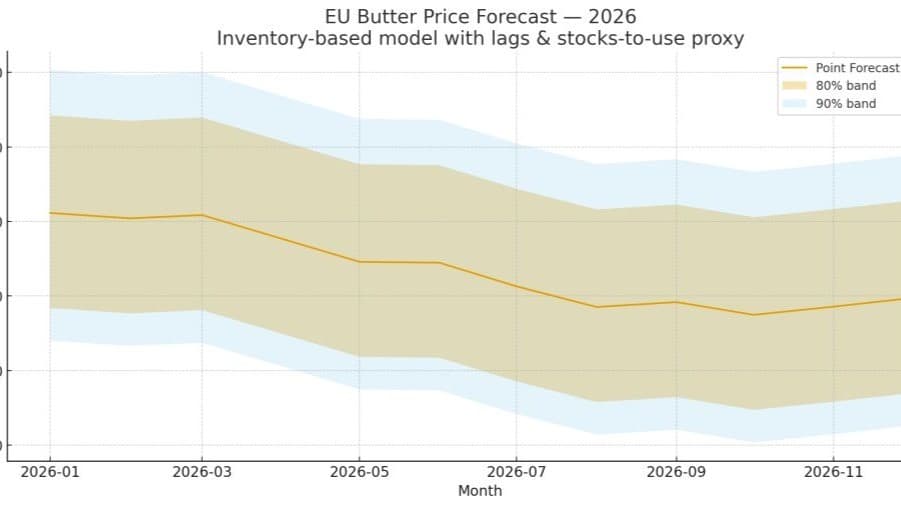
Summer Shopping or Summer Sale?
Last week was again a bit of a bearish week for the entire dairy industry. With cream prices under pressure and milk intake still strong, we keep seeing a market that has more supply than demand. Butter prices took another step lower, cheese prices cracked, and the powder market gave back a bit of its gains again.
El informe semanal
Recíbalo antes de que esté en cualquier otro sitio
Cada informe de mercado, directo a su bandeja de entrada en cuanto se escribe. Mantequilla, queso, polvo, líquidos — elija lo que realmente negocia.
Aproximadamente semanal · Gratis · Baja cuando quiera