Dairy New Year! Let’s start 2023!
Los informes de mercado se publican únicamente en inglés. El resto del sitio sí está disponible en su idioma.

First, we wish you, your families, friends, and colleagues the best for 2023! May you be in good health, among friends and we hope you are in the position to enjoy life to the fullest. We are looking forward to working more closely with you as a partner in dairy, and we hope to welcome many more members to the Get Fair Dairy network.

Last year we started our year with a photo of our son who was fascinated by the stars that came from the little fireworks we gave him. In the previous 12 months, he changed a lot. He is potty trained, he speaks quite well (and a lot), he can dance, he sings, he gets more independent and is able to do so much more himself compared to a year ago. But when we gave him his little fireworks again on the 31st of December it was like nothing has changed. We saw the same fascination on his face, the same joy and the wonder. It's a kind reminder that even if a lot has happened in 12 months, some things don't change.
The previous 12 months in dairy have been a roller coaster and we won't go over all the changes again. But in the end, we are 12 months later and one things hasn't changed. Demand and supply are still in a battle to determine the market price, and this dynamic we will follow closely in the upcoming year. And because we have been disconnected from the market a bit in the previous weeks we will come back on this topic in the days to follow. But what do we think is important to know starting the business today?
Gas and Energy prices:
The gas and energy prices have come down a lot in the previous months. Gas prices are now trading around € 75,-, this is almost 50% lower since our last update in November. Soft weather forecasts are helping keep the EU usage down and big purchases for LNG are also boosting confidence that a shortage for this year is not to be expected. This is good news for the coops who process a lot of milk in their drying and for end users that are using a lot of gas while producing retail goods. Als this might boost retail demand a bit if consumers are hit less hard with high energy bills. Energy is one of the biggest contributors to inflation.
EURO fx rate:
To battle inflation, central banks have been increasing interest rates that have impacted the strength of the USD and EURO. As Europe needs to export a big part of its dairy production the fx rate for the EURO against the dollar has a big impact. Following the discussions, it seems that the FED will likely start slowing down the interest rate hikes, but the EU (which started later) still expects to continue with the fast increase of the interest rates. If true we expect to see the EURO/USD fx rate back around 1.10 / 1.15 which would be negative for export and will give a bit more pressure on the EU stocks
Container prices:
The container prices have had a big impact on export orders in the previous 3 years. Due to covid, some routes saw a 700-800% price increase, making exports from the US to Asia impossible almost. But after three years prices have dropped back to pre-COVID levels bringing that dynamic back to normal. In our opinion, this is also a bearish development for EU exports.
Retail demand:
The biggest one to watch in our opinion is the development of retail demand. In December the reported numbers already were expected to be bad, but the first signals we have been picking up are worst than some expected. Retail demand in Germany anecdotally has collapsed and we hear that a lot of Christmas stock is still in the warehouses of the suppliers. If demand in January doesn't show some improvement we expect the demand in Q1 for commodities to be weak as we have already seen quite a lot of covered buyers who indicated only to be back for additional demand from retail. Reading the newspapers it seems most consumers have only been hit recently by a fast declining spendable income. Looking at retail demand, we do not expect to see a lot of bullish news from hear.
China:
One of the (in potential) most bullish factors in and for the market might be the return of China to the world market. We saw that on the last GDT China seems to be back at the buying table a bit. This might have to do that the country is now without any significant COVID restrictions. Some speculate that their absence from the market has caused their inventories to have run a good bit lower and they would need to restock. We think China is a very welcome buyer on the world market and could potentially stop the bearish trend (mainly for powders) for European commodity prices.
Milk production:
And last, but definitely not least, we have to keep looking at the milk production in the EU. With record-high payout prices, we now see record volumes of milk in some countries. The Netherlands has the highest milk collection ever with a month-on-month increase between 4-5%, Germany is up around 3% in the previous months, Ireland is back on track with their planned growth and even France is showing small plusses in a year when they are faced with the worst drought ever. Poland keeps increasing their milk intake and Belgium is even up 5-6% month on month in the previous months.
Looking outside of the EU we see that the US milk intake is also picking up speed but the NZ milk intake and the intake from Australia are showing quite some big decreases. It seems the only way the EU will bring its milk production down is to decrease the contract milk price dramatically. Arla, Friesland, DOC and many others have been lowering the price towards 60-61ct but we only expect to see a negative effect on milk intake when prices will go below 45ct. Until then we expect to see strong milk production from all the major EU dairy producers.
Más desde la mesa
The Bull, The Bear & The Black Swan 
The Bull, The Bear & The Black Swan
Last week was an intense one. When conflict erupted in the Middle East, the market's first instinct was to buy. Partners moved quickly on available offers, and by Tuesday the GDT had rallied alongside a broad bullish swing across agricultural commodity markets world wide. For a moment, it felt like the market had made up its mind. The second half of the week told a different story.
The Bull, The Bear and the Fairy Dust 
The Bull, The Bear and the Fairy Dust
After another active week of trading and yet another slide in prices, we started preparing this week’s report. But beyond concluding that the market remains bearish, there are countless ways to tell the same story: more milk, more stock, slower demand, lower prices. You know the drill. So this week, we’ll skip the usual summary. Those who know us well know we have two children — Lina and Ollie.
The Five Phases of a Buyers Grief 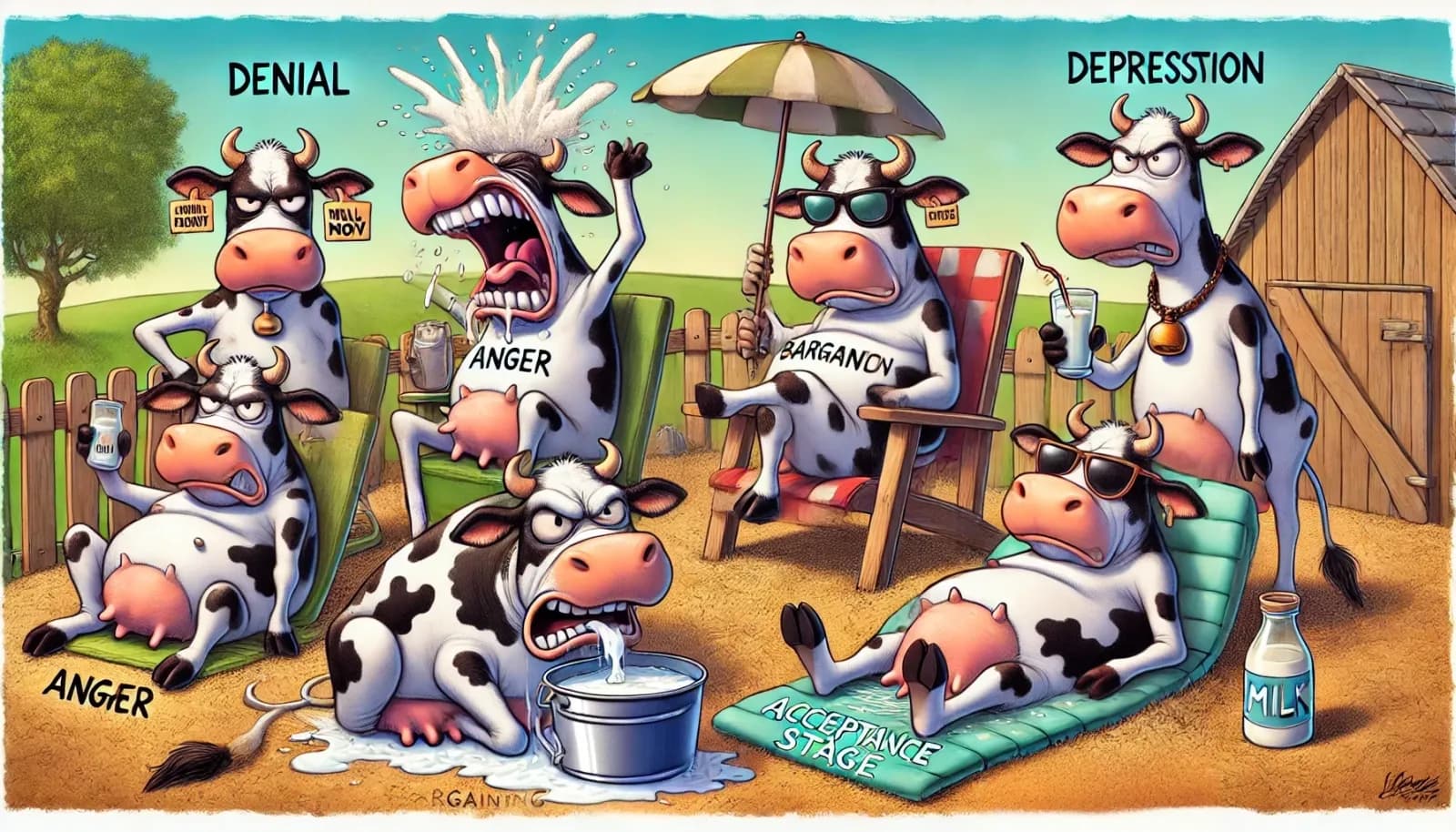
The Five Phases of a Buyers Grief
Yesterday, the market continued its bullish trajectory, driven primarily by surging spot prices for liquid products. With raw milk prices averaging €0.65, SMC prices reaching €2,550, and cream prices breaking records at €10,000 to €10,250, it’s evident that processors are fiercely competing for raw materials. This has left minimal supply available for commodity production.
El informe semanal
Recíbalo antes de que esté en cualquier otro sitio
Cada informe de mercado, directo a su bandeja de entrada en cuanto se escribe. Mantequilla, queso, polvo, líquidos — elija lo que realmente negocia.
Aproximadamente semanal · Gratis · Baja cuando quiera