The Effects from the Fight For Farmers
Les rapports de marché ne paraissent qu'en anglais. Le reste du site est disponible dans votre langue.

In every market, there are winners and losers. Dairy farmers seem to be the clear winners of the recent market. A report came out last week about the earnings of the average Dutch farmer in 2022. An average farmer earned in 2022 roughly € 115.000,-! This is € 70.000,- above the five-year average. The differences between farmers are big, but we can safely say that most farmers have little to complain about. (but we learned a farmer has always something to complain about).
Although the on-farm costs went up rapidly in 2022, the average milk price rose much quicker, causing the farmers to make this enormous jump in income. And the start of 2023 isn't looking bad for the farmers either. With the contract milk price still at record highs, their earnings will roughly be the same as at the end of last year. In the meantime, their costs are going down quickly. With the oil and energy prices dropping fast, feed cost back down and the cost of fertilizer back to levels before the quick increase of last year, dairy farmers are living the dream... for now. Because the 60ct payout price will disappear quickly, the question remains how long it will take to come back.
Because as we all know commodity prices have dropped dramatically over the last months, with the pace increasing in the first two weeks of 2023. We are now trading commodities at a milk price equivalent between 30ct and 35ct, roughly 50% below the current contract prices. It is unavoidable that Arla, Campina, DOC, Lactalis, DMK, Muller and the others will have to start cutting the milk price, but in their battle to keep as many farmers as possible, it seems everyone is watching the others carefully to avoid losing farmers to the competitor.
It is the fight for the farmers that might seem to benefit the farmers for now, but we fear it will be the same farmers that will have to pick up the check at the end of the year. The high payout price isn't just incentivising farmers to produce as much milk as possible, but it will also give them the ability to invest in more milk, even when the milk price goes sharply down. Our initial thought was that once the milk price would drop below the cost price for farmers we would lose the market momentum, but the more we think about it, the more unlikely we think it is we will see the milk intake in Europe decrease this year.
Sure, there is a wish from the Dutch government to cut the dairy herd in holland, but the effect we fear won't show any impact this year. And yes, across western Europe there is a trend that more farmers are quitting. But the effects of the previous year and the upcoming few months might be that this downtrend might slow down as well. Long term we think that western Europe will be producing less milk, and we will see a shift towards eastern Europe. In the meantime, the western EU coops will continue to keep as many dairy farmers in their circle and a fast-decreasing milk price will be the last thing they want.
So unless demand picks up somewhere in the months ahead it is likely we will continue the downtrend for commodity prices. Lets hope we will be losing a bit of pace of the week because, at the current rate, we will be trading February's price with another 10% discount on today's prices.
Plus du desk
The Bull, The Bear & The Black Swan 
The Bull, The Bear & The Black Swan
Last week was an intense one. When conflict erupted in the Middle East, the market's first instinct was to buy. Partners moved quickly on available offers, and by Tuesday the GDT had rallied alongside a broad bullish swing across agricultural commodity markets world wide. For a moment, it felt like the market had made up its mind. The second half of the week told a different story.
The Bull, The Bear and the Fairy Dust 
The Bull, The Bear and the Fairy Dust
After another active week of trading and yet another slide in prices, we started preparing this week’s report. But beyond concluding that the market remains bearish, there are countless ways to tell the same story: more milk, more stock, slower demand, lower prices. You know the drill. So this week, we’ll skip the usual summary. Those who know us well know we have two children — Lina and Ollie.
The Five Phases of a Buyers Grief 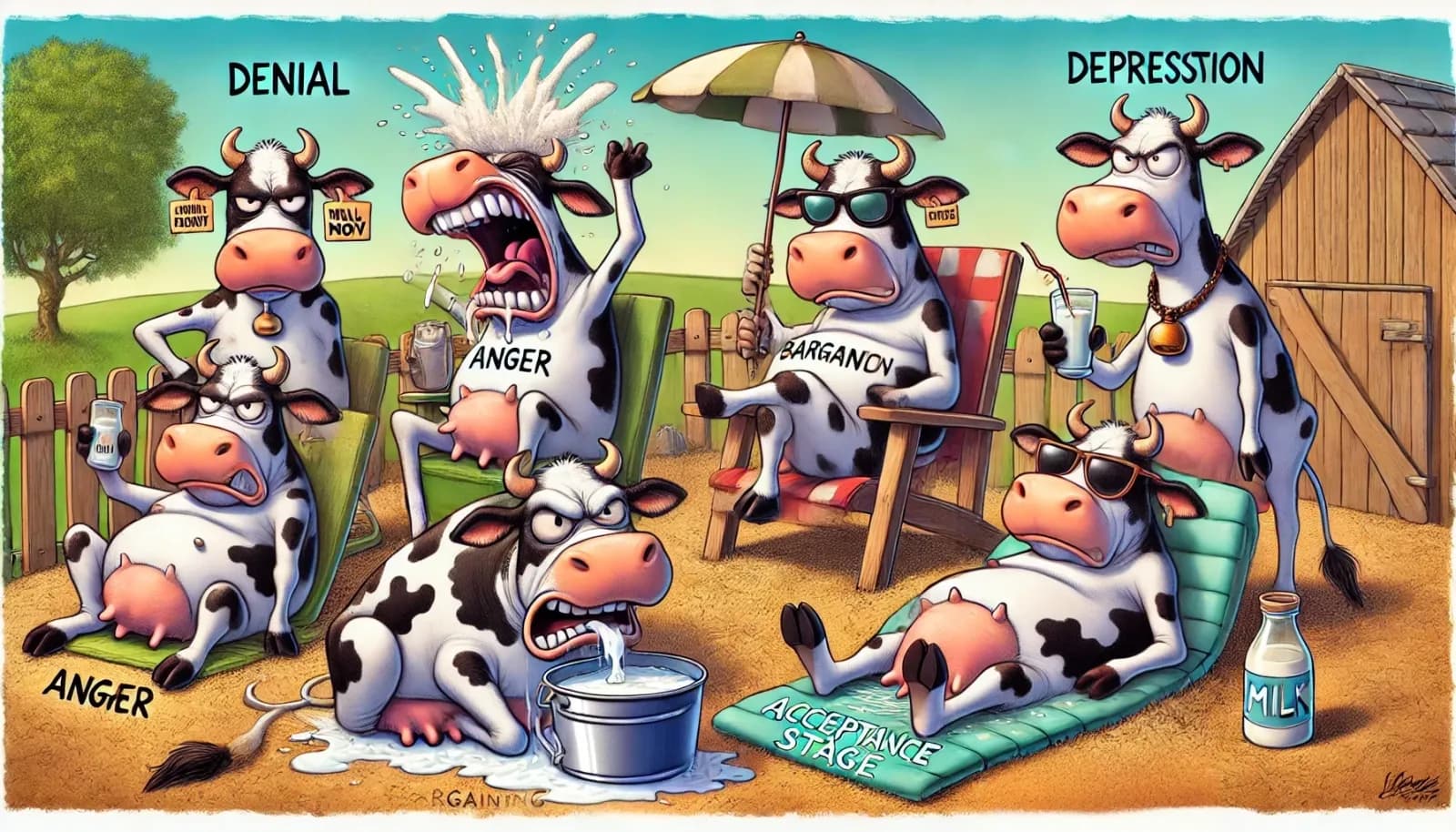
The Five Phases of a Buyers Grief
Yesterday, the market continued its bullish trajectory, driven primarily by surging spot prices for liquid products. With raw milk prices averaging €0.65, SMC prices reaching €2,550, and cream prices breaking records at €10,000 to €10,250, it’s evident that processors are fiercely competing for raw materials. This has left minimal supply available for commodity production.
Le rapport hebdomadaire
Recevez-le avant tout le monde
Chaque rapport de marché, dans votre boîte dès qu'il est écrit. Beurre, fromage, poudres, liquides — choisissez ce que vous négociez vraiment.
Environ hebdomadaire · Gratuit · Désinscription à tout moment