Goodbey Winter, Hello Spring!
Les rapports de marché ne paraissent qu'en anglais. Le reste du site est disponible dans votre langue.
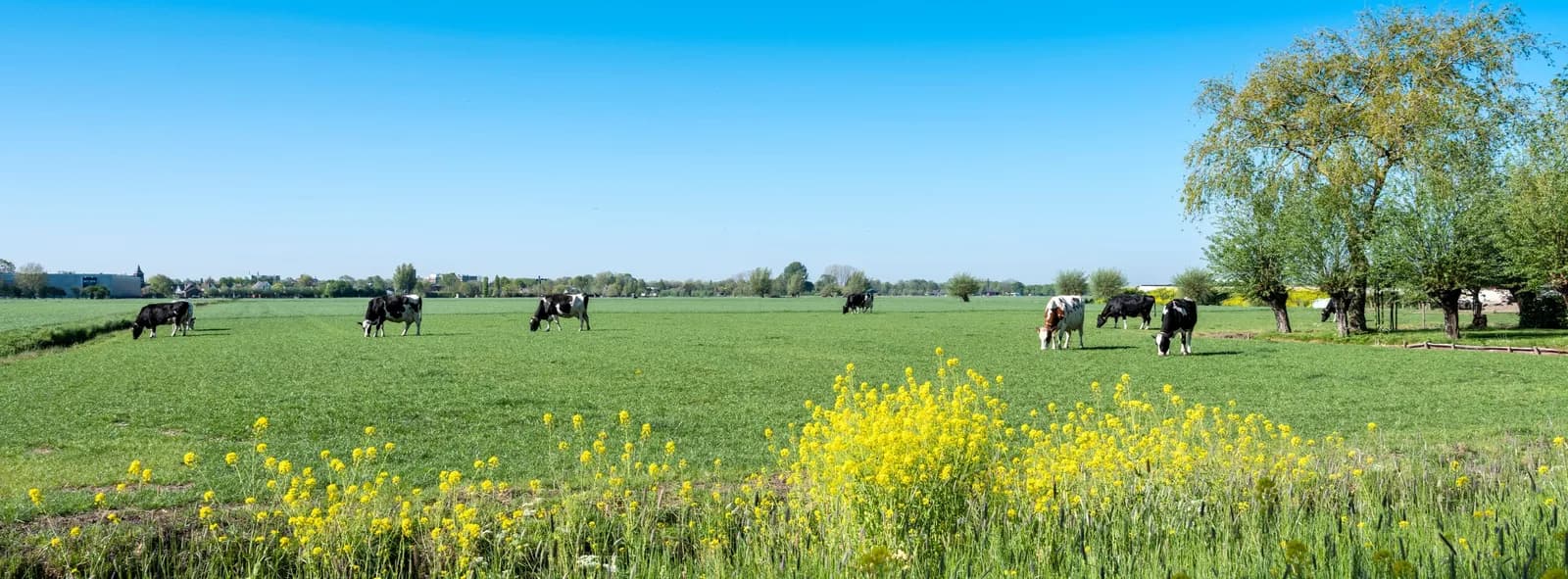
Today we say goodbye to the winter months and hello to the spring! We can look back on a cold quarter that has taken a chunk of the contract milk price and the commodity prices. In January we saw the most significant drop for all commodities, February was the month of the bullish corrections and in March the market settled on levels between the January lows and the February highs. Looking back Q1 of 2023 will not go into the books as a positive quarter for dairy farmers, but can Q2 bring a bit more sunshine for dairy farmers?
Looking back on the years we have been active in the dairy market the start of Q2 always brings the same debate. We have a part of the business that claims that after easter demand drops, the milk flush starts and the prices have to turn bearish. But looking back we have seen many times that after easter the demand for fresh products increases due to better weather conditions. And usually, when everyone expects lower prices, most buyers have postponed purchases so the start of quarter two can sometimes give some surprises. So what do we expect:
1. Milkflush (how much more milk will we see?)
Looking at the latest numbers the milk flush looks ok, but we also are getting some signals that the quickly decreasing milk prices is putting a bit of pressure on the curve. Most probably the EU will still milk more in Q2 compared to last year, but some of the countries are showing less increase compared to last year than we (and some of our partners) expected. If this is the effect of the quick milk price cuts from the biggest coops in western Europe can't be stated as a fact, but it seems likely. Most have gone from a +60ct milk price to below 45ct.
2. Retail demand (might see some demand coming back)
Most retail contracts are closed or will be closed in the next weeks. Without knowing the exact price we can safely say that prices for most dairy products are down a lot compared to the latest contract prices. If retailers will translate these lower purchase prices into lower retail prices, demand might be affected. In February we saw a short squeeze for butter when the new retail prices were set, will cheese follow a similar pattern? Or did cheese prices hold firm in recent weeks due to companies preparing for more demand due to lower prices? If most companies already anticipated the "short squeeze", we might see buying interest slow down and prices for euro blocks fall back as well.
3. Warehouses (they seem very full)
In the last weeks, it seems to become a bigger issue, and the issue comes early this year; warehouse spaces. Due to low demand in recent months, we hear that contracts have been postponed (most on powders) and a lot of stock has been building. One of the biggest storage partners for most of our clients who trade powders has trouble storing all the additional products. Some partners claim that they have to take some products out first, before storing new loads. We have already heard some partners need to look for other warehouse spaces. The same problems we had lately with deliveries of butter to the Netherlands. It seems a lot of winter butter has been stored in warehouses that have the capacity to defrost the goods.
The problem we see is that normally these problems appear at the end of quarter two, in June/July. And when milk production falls back after these months these problems usually solve themselves. It seems impossible to get hard data on stock for butter and SMP, but anecdotally they seem higher than in previous years. If the warehouse capacity will be limited this might affect the spot price for products, especially for SMP and butter.
4. Energy prices
Energy prices played an important role in previous years. High prices for oil and gas were impacting farmer costs and therefore the milk output. Oil prices and Gas prices have corrected back a lot, but the tension isn't out of the market yet. This weekend OPEC announced a production cut of 1.5 million barrels, at the same time as Chinese demand seemed to pick up a bit more. And although European gas supplies remained well-filled due to a mild winter, concerns for next year seem a bit bigger now Europe can fill their gas supplies with Russian gas anymore. We are not trying to predict the energy market, but following some of the more informed analyses we see some real concern about the impact the this week's OPEC decision. High oil prices can lead to lower milk production, but it might also lead to higher inflation.
5. Inflation (peaking?)
Speaking about inflation, it seems to have peaked and we see lower inflation numbers throughout Europe. But we aren't out of the woods yet, because the biggest part of the lower inflation comes from quickly declining energy prices. And looking at the bullet point above, there seems to be a reason for concern that higher prices might not be a thing of the past. Looking more closely at the inflation data we see food inflation still is one of the biggest factors. We see levels between 12-18% in us surrounding countries and it seems food inflation hasn't peaked yet. The demand side of the business due to high inflation remains the biggest question mark in our analysis.
In general, we think Q2 might be the last "weak" quarter of 2023. Especially the higher stocks and high inflation make us think that demand might still not be strong, and supply is well supported by stocks. We also think that most companies have seen the same and most all well prepared for tighter markets. Therefore we think that in the short term buyers will be most comfortable waiting out the market. In the meantime we expect producers to sell on a month-to-month basis, keeping short-term prices low, but it allows them to fully "enjoy" the market when demand outpaces demand again.
Plus du desk
Our Long View Before Our Long Break 
Our Long View Before Our Long Break
Last week the market found a bit of stability. After lower trades on cheese, the cheese market traded slowly up, although a real rally remains absent. Butter prices did dip a bit further, although at the start of this week we see some strength on the back end of the curve. And on powder, our bullish feeling just doesn't go away — and now we can find some confirmation in the market as well.
Dairy Carry Has a Shelf Life 
Dairy Carry Has a Shelf Life
Last week was bearish across the board — every product we broker leaned the wrong way. Powders lost more momentum, cheese slipped well below €3,000 for some products, and butter continues to impress with just how much keeps showing up. Supply, supply, supply.
Summer Shopping or Summer Sale? 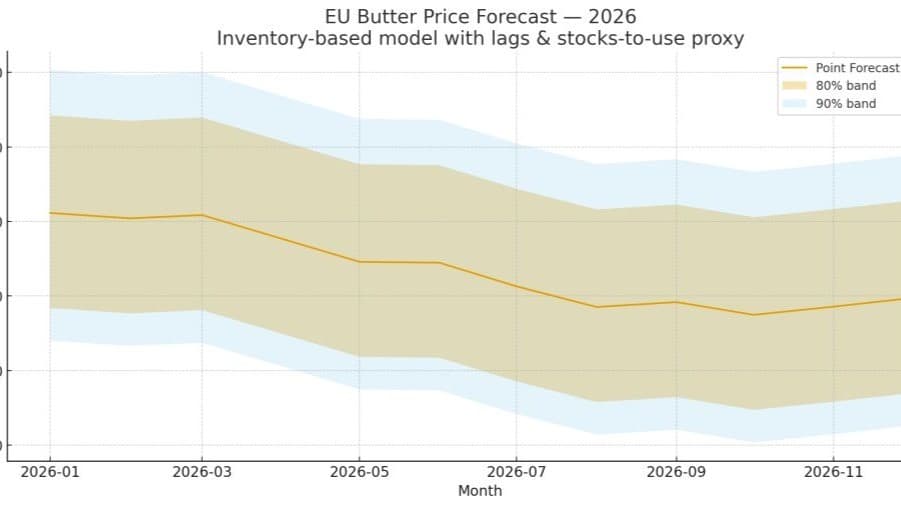
Summer Shopping or Summer Sale?
Last week was again a bit of a bearish week for the entire dairy industry. With cream prices under pressure and milk intake still strong, we keep seeing a market that has more supply than demand. Butter prices took another step lower, cheese prices cracked, and the powder market gave back a bit of its gains again.
Le rapport hebdomadaire
Recevez-le avant tout le monde
Chaque rapport de marché, dans votre boîte dès qu'il est écrit. Beurre, fromage, poudres, liquides — choisissez ce que vous négociez vraiment.
Environ hebdomadaire · Gratuit · Désinscription à tout moment