When will farmers quit?
Raporty rynkowe ukazują się wyłącznie po angielsku. Pozostała część serwisu jest dostępna w Twoim języku.

Yesterday was a quiet day with little activity. We did speak to a lot of counterparts and the main discussion seemed to be around the milk price and how it will impact farmers. Arla and RFC announced their new milk price for February and as expected they moved down to 56ct and 58ct per litre. Quite a strong move down (4ct and 3ct) but without any consequences and not nearly strong enough for most partners we spoke to today.
For a reversal of the current market trend we need one of the following to change; demand or supply. Demand is hard to get back quickly. Only when prices for consumers go down structurally, some retailers are offering quantity deals with big discounts, but all they manage to do is to keep the customer away for the weeks that follow, so only a temporary demand increases. But even on structural lower levels, it's hard to see demand spike again as long as the general financial sentiment stays as it is. We see enough worried people around us who are watching their daily spending. One survey online showed that people are getting more aware of how much they throw away and waste less.
So to have a quick impact, we have to look at the supply side of the market, and how to manage that. As we wrote before, we think the quickest way to cut supply is to cut the milk price, preferably before we hit the flush in the EU. But with the current steps of the two major producers in Europe, we won't come to a price level below cost price before summer, so well after we have seen the EU milk flush. Some dairies that are more focussed on producing commodities will have to come down faster, but they also struggle as they would like to keep as many farmers for their long-term strategic plans. Because most producers invested in new factories and new production facilities and need more milk, instead of less. It is as we wrote in our piece "The fight for farmers" a conundrum that isn't easy to answer, and we understand the struggle.
The biggest fear we see with all participants in the dairy market (supplier, buyers, traders) is that the comeback of demand and the fall in milk production will come at the same time later this year and will lead to another short squeeze and a price rally as we have seen in 2021/2022. The appetite to sell short is shrinking among traders and producers are very reluctant to sell forward at these low levels. They say they feel comfortable explaining a low milk price to their farmers if commodity prices are low, but not when they should up again. At the same time that sellers are getting more cautious, we do see end users looking to cover a bit more volume as they also expect that the chance for prices to decrease further becomes smaller for Q3/4 and an increase becomes more likely.
The change in buying and selling strategy will lead to a turn-around in the market, and probably at a moment, nobody will be expecting it. Most producers seem to think that this moment is very close as they foresee that the need to secure supply becomes bigger than the need to maximize profits even further. We agree that it looks more logical as a buyer to try and lock in a good price for Q3 and Q4 and maybe even in combination with a slightly higher price in Q2.
We personally are also reaching the point where we are no longer comfortable predicting long-term bearish markets, but we think the way don't isn't over just yet. But an old truth seems to become back again. Markets are driven by fundamentals long term, but strongly by sentiment in the short term. If the short-term sentiment becomes bullish, we might see higher prices for the next few days /weeks. But as said, until we reach the peak of the EU milk flush we think fundamentals will remain the same, in the favour of supply. This should logically keep the pressure on the price for a few more months.
Więcej z parkietu
The Bull, The Bear & The Black Swan 
The Bull, The Bear & The Black Swan
Last week was an intense one. When conflict erupted in the Middle East, the market's first instinct was to buy. Partners moved quickly on available offers, and by Tuesday the GDT had rallied alongside a broad bullish swing across agricultural commodity markets world wide. For a moment, it felt like the market had made up its mind. The second half of the week told a different story.
The Bull, The Bear and the Fairy Dust 
The Bull, The Bear and the Fairy Dust
After another active week of trading and yet another slide in prices, we started preparing this week’s report. But beyond concluding that the market remains bearish, there are countless ways to tell the same story: more milk, more stock, slower demand, lower prices. You know the drill. So this week, we’ll skip the usual summary. Those who know us well know we have two children — Lina and Ollie.
The Five Phases of a Buyers Grief 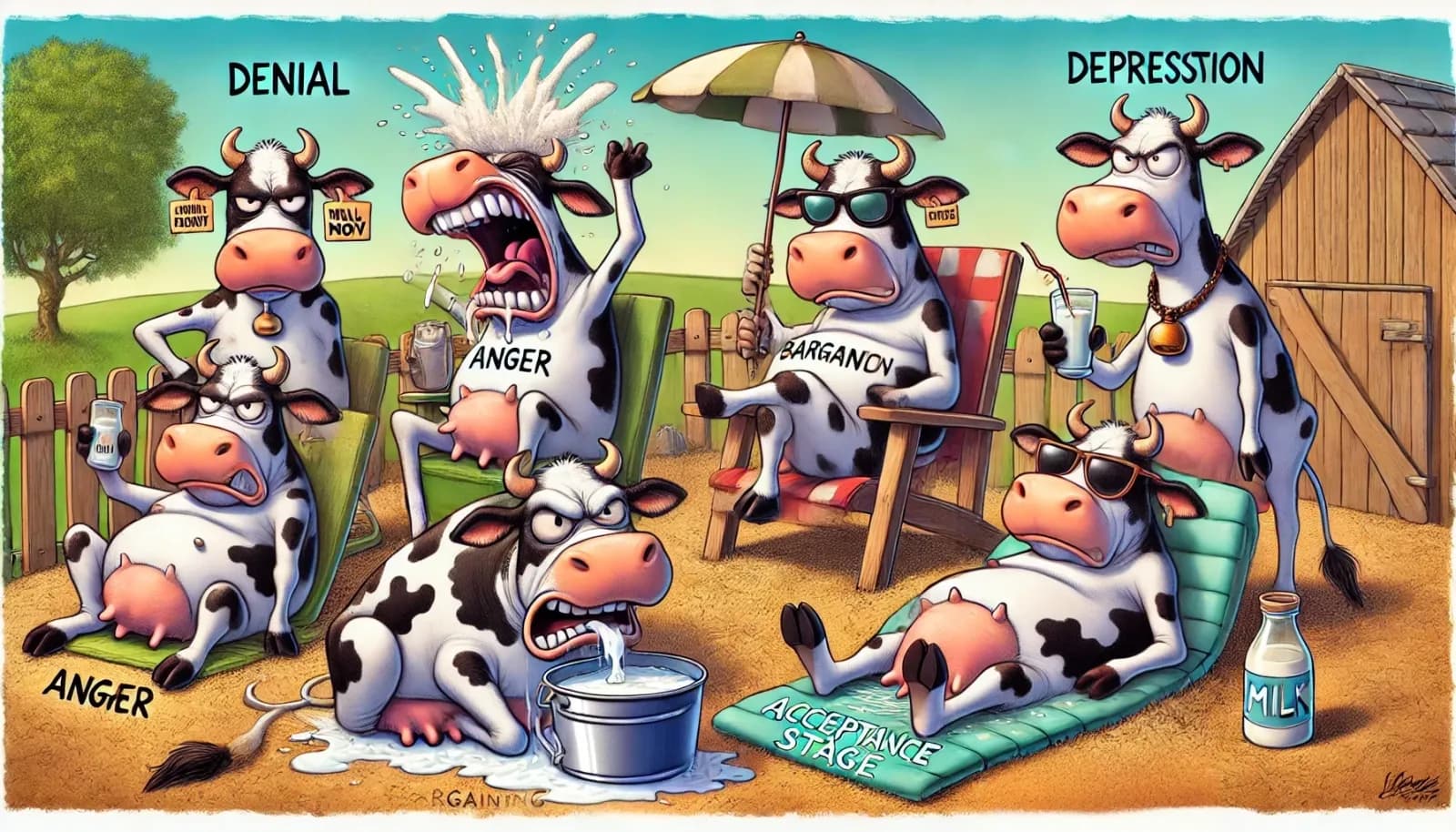
The Five Phases of a Buyers Grief
Yesterday, the market continued its bullish trajectory, driven primarily by surging spot prices for liquid products. With raw milk prices averaging €0.65, SMC prices reaching €2,550, and cream prices breaking records at €10,000 to €10,250, it’s evident that processors are fiercely competing for raw materials. This has left minimal supply available for commodity production.
Raport tygodniowy
Miej go, zanim trafi gdziekolwiek indziej
Każdy raport rynkowy prosto na Twoją skrzynkę, gdy tylko powstanie. Masło, ser, proszki, produkty płynne — wybierz to, czym naprawdę handlujesz.
Mniej więcej co tydzień · Bezpłatnie · Rezygnacja w każdej chwili