The Perpetual Bull and The Perpetual Bear
Raporty rynkowe ukazują się wyłącznie po angielsku. Pozostała część serwisu jest dostępna w Twoim języku.

Last week was a difficult week for brokering business. We have been travelling, our partners were travelling and the market was flooded with bullish and bearish news. To put all the new pieces of information together might take some time. The majority of the market identifies two major developments that both have opposite effects on the market. The negative forecast for milk growth for the coming years is a growing concern for everybody who loves dairy. And with fewer products available prices should rise. On the other hand, demand has been mediocre and the forecast in some regions of the world is starting to be very negative. So should the market players be bullish? Or bearish?
The Perpetual Bull:
Some people are just always bullish. Even when they agree prices are going down they will still end their sentence with ... but! But prices will go up again... but look at the stocks... but look at the demand for spot milk.... And Yes! The perpetual bull has some strong arguments. Milk production in the EU, the US and NZ seem to be capped and most likely all regions will see less milk in the next years. At the same moment, the world population is growing and the world needs to feed more mouths. It even doesn't really matter if we feed them with dairy, alternative food sources can impact the cost of milk production. The cost of milk production has been increasing enormously as well. Feed costs might be bouncing back a bit, but energy and labour costs aren't and probably won't in the near future. The perpetual bull always sees a market that has the potential to break out again. This market view makes him also a bit biased to all the market information he/she consumes. Most of the perpetual bulls are manufactured. Not only because it fits best to their business model, but also because they are faced on a day-to-day basis by the shrinking milk supply and higher cost of production.
The Perpetual Bear:
And some people are just always bearish. Even when they agree prices are on the rise, they will still point toward bearish threads that might reverse the bullish sentiment. We have been, more than once, called a perpetual bear. And over the last 18 months, we have been bearish. Our bearish view came started when markets traded at all-time high prices in Q2 2022. And since then we have seen a market that is oversupplied and struggling to keep buying interest steady. Perpetual Bears are mostly found among end users. Not only does a lower commodity price suit them best, but they are also faced first with declining demand. The perpetual bear looks at the market with a biased view and will interpret some data more bearish than the perpetual bull.
The best example we heard last week. Most of our partners see the same thing, low stocks at the producers. Some producers even claim to be on the lowest stocks they have ever had. In the eyes of the bulls, this is a bullish market element. Because if demand spikes, producers won't be able to supply fast and a short squeeze lies around the corner. This is great logic and in any argument, most will agree. Until they will meet the perpetual bear. They will tell you that if producers would be expecting rising commodity prices in the near future they would keep some stocks to sell them at higher prices. The reason most producers have an empty warehouse according to them tells you they don't expect any change in commodity prices. The bias of the partner determines the interpretation.
The Flexible Market Watcher
But most of our partners would identify themself as flexible market watchers. Traders tend to be most flexible in adjusting their market view and brokers should be the most unbiased. Brokers do not have an advantage with either higher or lower prices occurring, they should be most suited to analyse the market. But we have to admit we also have a bias once we explain why we think the market is trading bearish or bullish. To be fully unbiased is almost impossible, and even the best analyst will agree on that. The only thing we at Get Fair Dairy can do is summarize the facts we see, the sentiment we hear and the offers and bids we receive. Is also upon you as a reader to make the balance between bullish and bearish arguments. We remain slightly bearish based on that we see the following:
Milk Supply is not that bad
As said in the previous emails, but also confirmed in the presentation seen last week during the StoneX event, milk production isn't as bad as some think / might have thought. The long-term outlook might be we will be undersupplied, but the short-term trend isn't as negative as we felt a short while ago. Surely the French Milk collection is down a lot, but the rest of the EU seems to offset that decline. We might see a small deficit in the EU YoY in the next months, but it's against a very strong milk supply quarter in Q4 2022. The US milk production isn't growing very hard, but it is still growing. In the meantime, milk in other regions such as Argentina, Brazil and China is flowing a good bit stronger. On the world stage, the supply isn't as bad as some might have thought, it just isn't following the growing pace of the last years. But is that a problem?
Demand slowing down (and a negative forecast)
The worldwide milk supply needs to grow to keep feeding the growing world population. Also with a long-term growing demand side, a long-term declining (or less strong growing) milk supply would have an enormous impact on dairy prices. However, the current slowdown in milk production growth seems to fall at the same moment that dairy consumption is declining. The biggest visible change we see is in China, but anecdotally we hear less demand from end users in the EU, US and South-East Asia as well. With high interest rates we already see producers keeping as low stocks as possible, but the stories we hear suggest there are big stocks in China and high stocks with traders and end users in the EU. If prices for commodities might rise a bit, most will prefer to work through their expensive stocks first. The cost of buying and financing extra stock at higher prices than seen in the previous weeks is just not attractive.
What to watch for this week?
This week we will be watching the usual key figures again. What action will we see on the GDT? Our personal forecast is flat to slightly down. We know there are some bullish people in the market that expect again a firm increase (Algeria in the market, and the bullish sentiment in the EU at the beginning of last week) but we would expect more pressure on WMP putting the headline result slightly below zero. We must admit NZX/SGX futures would predict the more bullish scenario.
The milk numbers from last week suggest that the EU milk is recovering a bit from the heatwave and with perfect weather conditions in front of us we would expect milk production over the next weeks to bounce back up. If so, this should be reflected in the prices of raw milk and cream. Spot milk prices eased already a bit last week for NL en DE and cream prices didn't increase for the second week in a row. We would forecast a slight decrease in liquids this week.
Those who call us perpetually bearish might be right. We do see some upward momentum on some commodities, but overall we can't shake the feeling that we haven't reached the bottom of the market yet. Cheese prices do look firm, but there is big doubt among our partners if these firm prices will last. Butter prices are still under pressure as stocks are the biggest issue this market faces. SMP prices are trying to break out, this week might be key to see if prices will trade again higher. We wish everyone this week a lot of wisdom, and happy trading, and let us know if we can help you fulfil your demand or help you more your supply.
Więcej z parkietu
Our Long View Before Our Long Break 
Our Long View Before Our Long Break
Last week the market found a bit of stability. After lower trades on cheese, the cheese market traded slowly up, although a real rally remains absent. Butter prices did dip a bit further, although at the start of this week we see some strength on the back end of the curve. And on powder, our bullish feeling just doesn't go away — and now we can find some confirmation in the market as well.
Dairy Carry Has a Shelf Life 
Dairy Carry Has a Shelf Life
Last week was bearish across the board — every product we broker leaned the wrong way. Powders lost more momentum, cheese slipped well below €3,000 for some products, and butter continues to impress with just how much keeps showing up. Supply, supply, supply.
Summer Shopping or Summer Sale? 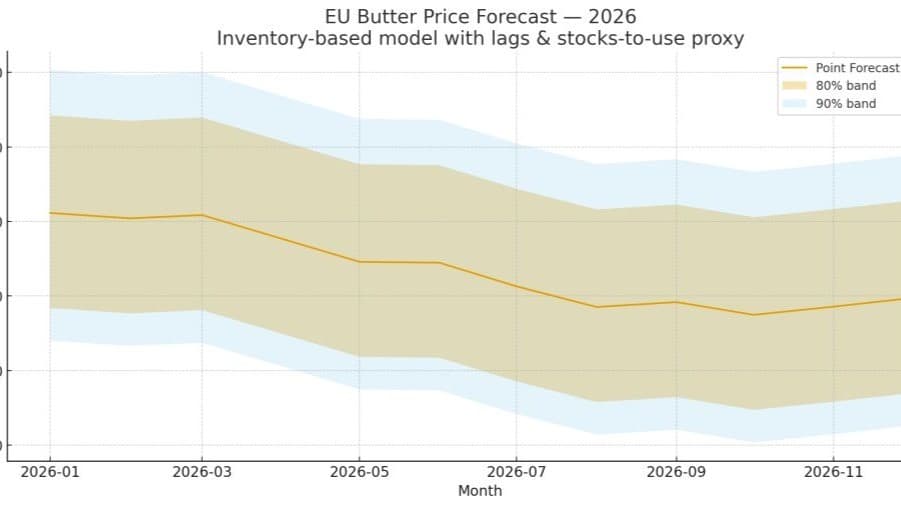
Summer Shopping or Summer Sale?
Last week was again a bit of a bearish week for the entire dairy industry. With cream prices under pressure and milk intake still strong, we keep seeing a market that has more supply than demand. Butter prices took another step lower, cheese prices cracked, and the powder market gave back a bit of its gains again.
Raport tygodniowy
Miej go, zanim trafi gdziekolwiek indziej
Każdy raport rynkowy prosto na Twoją skrzynkę, gdy tylko powstanie. Masło, ser, proszki, produkty płynne — wybierz to, czym naprawdę handlujesz.
Mniej więcej co tydzień · Bezpłatnie · Rezygnacja w każdej chwili