

More Milk, More Commodities, More Pressure
Raporty rynkowe ukazują się wyłącznie po angielsku. Pozostała część serwisu jest dostępna w Twoim języku.
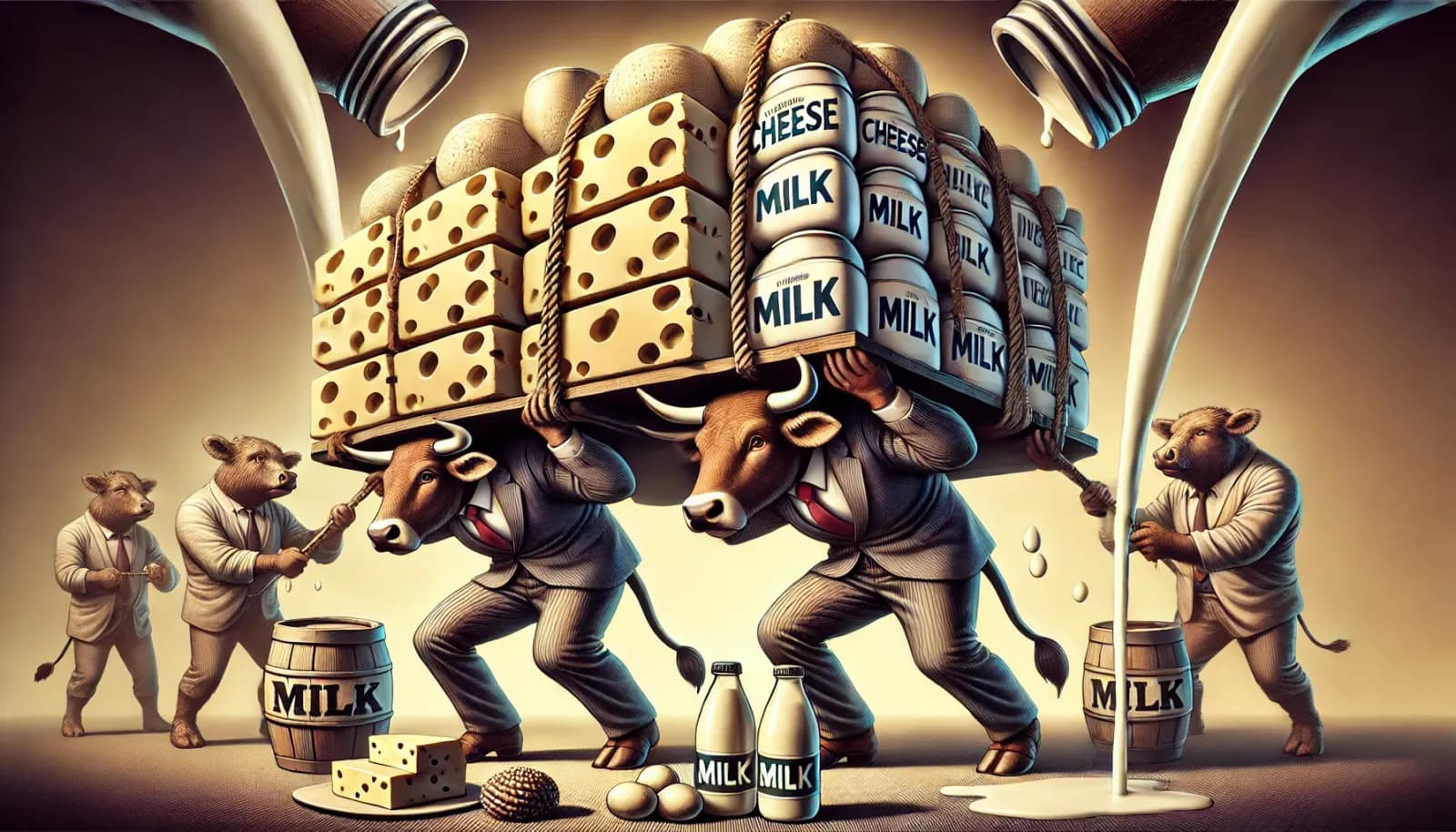
Last week, the market activity we had been anticipating throughout January finally made its return. An increase in milk supply—both seasonally and year-over-year—is driving more volume into the commodities we broker. And as the market gets flooded with more product, the inevitable pressure starts to build. Even the most bullish of our producers are beginning to acknowledge that, should this trend persist, commodity prices are likely to decline. That said, unlike previous years, the correction appears to be taking its time. After a period of extreme volatility, this market is behaving with an unusual level of composure. The gradual decline in prices seems to be keeping pace with the equally gradual increase in production.
One might assume that factual data should be the least controversial aspect of market discussions, yet last week demonstrated once again that even hard numbers can be a matter of interpretation. Take Friday’s release of Ireland’s December milk production figures, for example. With a staggering 30.1% year-over-year increase in milk supply and a 32.2% rise in milk solids, most of our partners saw this as an unequivocally bullish signal. Even considering that Ireland produces roughly six times more milk at its peak than in December, such an increase has undeniable implications. Ireland’s production slump from October 2023 to January 2024 was the worst in recent memory, yet since October 2024, the country has been setting new monthly production records. Our bearish colleagues, see no room for debate—every indicator is flashing green for Ireland to have its strongest production year ever.
But let’s not dismiss the bulls just yet. They have their own interpretation, and it’s worth hearing them out. Their take? Those impressive year-over-year increases should be viewed in the context of last year’s exceptionally weak collection figures. December 2023 saw a 27% drop compared to the prior year, so when placed in that context, the 30.1% jump this year suddenly seems far less groundbreaking relative to 2022. Perspective is everything.
Strong vs. Weak Comparables
This debate mirrors many of the discussions we have with our partners when it comes to interpreting data. Strong numbers often appear strong simply because they are measured against weak comparables. Consider the robust butter and skimmed milk powder (SMP) production figures reported in Germany last week. One reader pointed out that drawing direct comparisons might be misleading, given that 2024 was a notably weak year for butter and SMP production. Upon reviewing the numbers, it turns out they were right—2024’s production figures were underwhelming. So how strong, really, are Germany’s week 4-5 figures if they’re being measured against such a weak baseline? Then again, 2023 was a strong production year… and so the cycle continues.
Similar debates arise across various market indicators. Someone recently pointed out that German retail butter demand is down 6% year-over-year, which certainly sounds bearish. But given that butter demand was unusually high the previous year, how much does this year-over-year decline actually tell us about the broader 3-to-5-year trend?
Picking the Argument That Fits Your Market Preference
We’ve said it before, and we see it every week—market participants tend to interpret data in ways that align with their positions. When faced with seemingly bullish data, the bears will find a way to reframe it as either outright bearish or at least less bullish. And bullish traders? They’ll always find a way to add an asterisk, ensuring that the numbers are put into the proper ‘context.’
Our perspective is a little different. While a year-over-year increase in milk production might still leave output below the three-year average, we see it as a trend break. Likewise, a year-over-year decline in retail sales signals a shift in consumer behavior. And when we start seeing multiple data points pointing to trend breaks, it would be unrealistic to expect commodity prices to remain stable.
Producers will always prefer the most bullish interpretation possible—no surprises there. So when even producers start to quietly acknowledge that they don’t expect commodity prices to rise in the coming weeks, that signals a clear departure from a long-standing bullish sentiment. Buyers, on the other hand, will always lean towards the most bearish reading of the data. And traders? Their outlook is inevitably influenced by their positions, whether long or short. And what about us brokers? Well, we don’t profit from high or low prices—we profit from volatility. So, of course, our analysis will always come with its own particular bias.
New Trends: More Product / Easing demand
Although not everyone will agree with this, we clearly see a new trend. More production is coming to the market while at the same time, demand is softening. More raw milk is pushing spot milk prices down well before we even approach the seasonal peak. Cream prices eased again last week, and most partners forecast that availability will continue to increase, while demand is expected to pick up only when temperatures start rising.
On the butter front, we are seeing clear downward pressure. Producers are ramping up output, with more of them now willing to discuss sales well below EEX prices. Irish producers have been particularly hesitant to sell over the past weeks, turning down bids from €7,300 all the way down to €6,900—until last week. In the latter part of the week, we started hearing more inquiries from producers seeking bids. German producers have lowered prices to as low as €7,000 for February and March, while in Ireland, we’re now hearing about offers as low as €6,880 for March collections. We have to admit that finding significant volume at the low range isn't that easy.
Speaking to butter buyers, we hear a consistent message—demand remains questionable. Buyers are either locking in smaller volumes or structuring contracts with greater flexibility. While no one is speaking of a dramatic decline, there is little enthusiasm. The higher retail prices that have trickled down over the past few months finally seem to be taking their toll—not just on butter as a standalone product, but also on goods that contain butter like chocolate, croissants and our beloved cookies.
The same cautious approach is evident in the cheese sector. Partners supplying both retail and food service report hesitant buyers. Cheese prices have held relatively stable due to low stocks and reduced production. However, with milk volumes now increasing, butter demand wavering, and whey product prices holding firm, cheese valorization is once again gaining traction—suggesting that prices for March onward may ease slightly. The optimism reflected on the EEX seems to be fading, with prices trending downward once again.
Only in the SMP market does it appear that growing demand could support prices. With the EU being the most competitively priced region, exports should pick up. However, all of our partners are encountering the same obstacle—buyers are rejecting prices above €2,500–€2,550. The reasons vary, but cheaper SMP from the US and less expected regions appears to be capping global market prices. Meanwhile, EU production remains strong—not just due to recent improvements in valorization, but also because producers are anticipating more export opportunities. So, even with a more favorable sales environment for SMP, the ample supply side seems to be keeping the upward momentum in check.
Closing Thoughts
So here we are—more milk, more commodities, more pressure, and just enough conflicting data interpretations to keep the market interesting. The eternal tug-of-war between bullish and bearish sentiment continues, with both sides finding just enough evidence to support their stance. But as production keeps climbing and demand hesitates, it’s hard to ignore the writing on the wall. Prices are feeling the pressure, and market sentiment is shifting accordingly. If nothing else, this all reinforces a timeless truth—dairy markets are never boring. And if they ever do get boring, well, that’s probably just the calm before the next storm. So buckle up, and as always, stay hedged.
Opening Offers
We start the week with the following offers per commodity
Butter:
- 6 loads of NL/DE/BE fresh/frozen butter on Q2 at € 6900
- 6 loads of N-Irish Sweet Cream butter for Feb at € 6880
- 6 loads of Polish Sweet Cream butter for March at € 6900
- 6 loads of NL/DE/BE fresh/frozen for Q3 at € 7050
- 4 loads of Irish Lactic for March at € 6975 FCA Ireland
Cheese:
- 6 loads NL/DE Gouda for Q2 at € 4350
- 6 loads of Mozzarella for February / March at € 4125
- 6 loads of Mozzarella for Q2 at € 4150
- 4 loads Gouda Feb/March at € 4350
Powders:
- 250mt Non-Standerdized SMP N-Irish / UK origin with 36% protein at € 2525 FCA NL/BE
- 300mt Non Standardized EU27 DAP NL at € 2550 with 36% protein
- 100mt Non-Standerdized Portuguese origin at € 2450 with 35% protein (18 months old)
- 200mt WMP NZ-Origin DAP NL € 4150
Więcej z parkietu
Our Long View Before Our Long Break 
Our Long View Before Our Long Break
Last week the market found a bit of stability. After lower trades on cheese, the cheese market traded slowly up, although a real rally remains absent. Butter prices did dip a bit further, although at the start of this week we see some strength on the back end of the curve. And on powder, our bullish feeling just doesn't go away — and now we can find some confirmation in the market as well.
Dairy Carry Has a Shelf Life 
Dairy Carry Has a Shelf Life
Last week was bearish across the board — every product we broker leaned the wrong way. Powders lost more momentum, cheese slipped well below €3,000 for some products, and butter continues to impress with just how much keeps showing up. Supply, supply, supply.
Summer Shopping or Summer Sale? 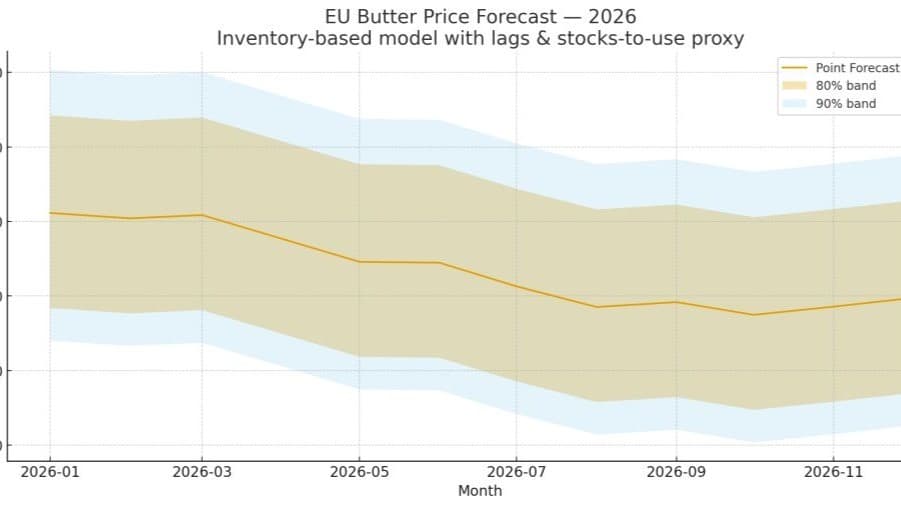
Summer Shopping or Summer Sale?
Last week was again a bit of a bearish week for the entire dairy industry. With cream prices under pressure and milk intake still strong, we keep seeing a market that has more supply than demand. Butter prices took another step lower, cheese prices cracked, and the powder market gave back a bit of its gains again.
Raport tygodniowy
Miej go, zanim trafi gdziekolwiek indziej
Każdy raport rynkowy prosto na Twoją skrzynkę, gdy tylko powstanie. Masło, ser, proszki, produkty płynne — wybierz to, czym naprawdę handlujesz.
Mniej więcej co tydzień · Bezpłatnie · Rezygnacja w każdej chwili