GDT to determine the bearish sentiment
Raporty rynkowe ukazują się wyłącznie po angielsku. Pozostała część serwisu jest dostępna w Twoim języku.

Yesterday was, as we have seen in the previous weeks, a typical start to the week. Most partners have their weekly meetings taking a view at their needs to sell/buy and usually come back at the end of the day to see where opportunities lie. With two small trades the week sets off slowly but follows the trendline of the past weeks, slowly down.
And with another GDT this afternoon we expect most partners to sit on their hands to wait for the results to give some direction. The overall expectation is that the auction will publish a negative result with futures for all commodities in the red apart from AMF. We would expect a correction as well. Looking at the prices in the US and Europe for SMP and Butter and following last week's GDT Pulse results for WMP we would be surprised to see big plusses. Only AMF should correct upwards as long as it is trading at a discount v.s. butter.
It seems a lot will depend on the activity from China. If their activity will remain below normal we expect a negative GDT with a result of around minus 4-5%, but somehow the market could get a surprise as the first contracts for 2024 might show some recovery. But at best we see a result around minus 2%.
With the worldwide dairy market in a bearish mood, we think the GDT results might determine how bearish we will remain. If we manage to stay relatively flat v.s. the last event it might give the market some confidence that we have found a bottom. Any result worse than minus 5% might push the market into a higher bearish gear.
Slow down of economic activity
That demand is down doesn't seem to be a problem for the dairy market alone. The PMI index in the Netherlands came out yesterday, posting again a negative outlook from the Dutch industrial sector, this is in line with the European average. Worldwide industrial growth is slowing down due to high inflation and increased interest rates. Production companies are lowering their stock levels and also lowering their sales prices to boost demand. We also see companies cutting staff to reduce costs. The forecast from the Europen industries remains bearish for the following months.
It seems production companies using dairy commodities as an ingredient follow the same logic as the production companies in general, they are slowing down purchases and trying to reduce stock as these stocks way heavy on the company cost and make them less agile to move through the fast-changing markets. If the purchase managers at the companies that buy dairy commodities have the same outlook as their peers, we have to assume buying interest will remain low for the remainder of this year.
Więcej z parkietu
Our Long View Before Our Long Break 
Our Long View Before Our Long Break
Last week the market found a bit of stability. After lower trades on cheese, the cheese market traded slowly up, although a real rally remains absent. Butter prices did dip a bit further, although at the start of this week we see some strength on the back end of the curve. And on powder, our bullish feeling just doesn't go away — and now we can find some confirmation in the market as well.
Dairy Carry Has a Shelf Life 
Dairy Carry Has a Shelf Life
Last week was bearish across the board — every product we broker leaned the wrong way. Powders lost more momentum, cheese slipped well below €3,000 for some products, and butter continues to impress with just how much keeps showing up. Supply, supply, supply.
Summer Shopping or Summer Sale? 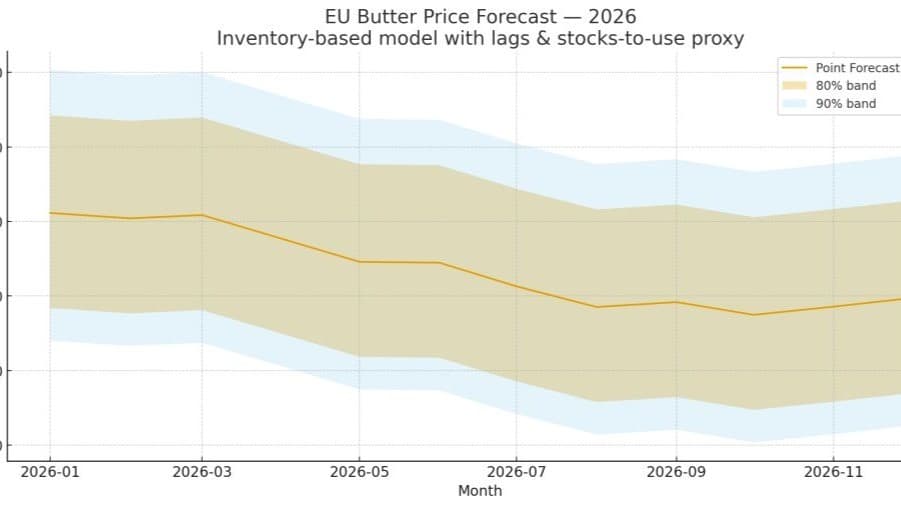
Summer Shopping or Summer Sale?
Last week was again a bit of a bearish week for the entire dairy industry. With cream prices under pressure and milk intake still strong, we keep seeing a market that has more supply than demand. Butter prices took another step lower, cheese prices cracked, and the powder market gave back a bit of its gains again.
Raport tygodniowy
Miej go, zanim trafi gdziekolwiek indziej
Każdy raport rynkowy prosto na Twoją skrzynkę, gdy tylko powstanie. Masło, ser, proszki, produkty płynne — wybierz to, czym naprawdę handlujesz.
Mniej więcej co tydzień · Bezpłatnie · Rezygnacja w każdej chwili