Between Doubts and Fear
Raporty rynkowe ukazują się wyłącznie po angielsku. Pozostała część serwisu jest dostępna w Twoim języku.

Yesterday, we noticed our partners spending a long time wrestling with how to interpret the situation. On one hand, we saw a small glimmer of hope in the news that a German product appears to have been declared free from milk originating in an FMD (Foot-and-Mouth Disease) area, which might potentially allow it to resume exports. However, around midday, reports emerged of a potential second FMD case at a small company east of Berlin. Concerns over the disease’s impact on the EU dairy market began to shift from uncertainty toward fear, sparking noticeable anxiety on the commodity markets. Futures on the EEX tumbled across all products, and we suddenly received a flood of offers for SMP, cheese, and butter. Where do we go from here? It’s hard to say.
We understand this is a sensitive topic, and we are not biologists. We have no intention of speculating too much on what might happen next. At the same time, it would be odd not to mention FMD when it is clearly the main force behind current price fluctuations. So we repeat: we are NOT specialists in animal diseases or the regulations surrounding health certificates and movement restrictions. Think of us as the “barometer” of dairy sentiment, simply reflecting how our partners react to events—no more, no less.
First, regarding the second potential case east of Berlin: as of now, the test results remain inconclusive. On Friday morning, the Friedrich Loeffler Institut is expected to share its findings. In the best-case scenario, the test is negative and the suspicion turns out to be false. Even then, the market will likely remain on edge. This suspicion alone has shown that the market can handle a single outbreak but becomes more anxious at the idea of multiple cases. Over the next two weeks, there is hope for no new reports, which might allow a bit of relief.
Now, the more delicate speculation—what if the result comes back positive? We realize some of our partners may prefer not to consider this possibility. Still, if there is a second confirmed case, it means the virus has spread over a greater distance, increasing the likelihood of additional cases. Even so, if it’s confined to Germany, the overall situation may not differ too much from the one we’ve been in since last Friday. Milk from the affected region would become problematic, and German authorities would need to double down on controlling the spread. We believe they are already making their utmost effort. The reason for the widespread concern is the 40 km distance from the first outbreak. But again, this is speculative—let’s hope the dairy market dodges this bullet for the time being.
Effects: Buyers back away, Sellers sell off.
For several days it seemed no one wanted to make a firm decision. That changed yesterday. By midday, more sellers were ready to move product, while buyers grew wary of what’s coming next and stepped back. The biggest fear is that uncertainty will cause the EU to lose export volumes, requiring more milk to be processed for internal use and potentially leading to a buildup of stock. Since prices are already at historically high levels, many companies find it prudent to sell forward to ensure their farmers at least receive a reasonable milk price if things take a turn. As one of our partners put it:
“Even in the best-case scenario, German (and possibly EU) dairy products have taken a reputational blow. Buyers with alternative sources will shift away, leaving the EU with fewer outlets in the coming months.”
We see similar reactions among our export partners. It’s not that EU product has lost all credibility, but buyers are more hesitant and now also ask us for alternatives. Seven days of holding off have already made an impact on the market. If this continues for another three to four weeks, the pressure will mount.
EU Internal Situation
Domestically, there has been a noticeable shift as well. More companies outside Germany are announcing they can no longer accept German milk, cream, concentrate, butter, cheese, or SMP. It is somewhat surprising since some of these buyers have no direct link to export markets, and there should be minimal risk in taking in German products that are already heat treated. German dairy goods are still safe for consumption. Despite this, more and more buyers are placing German goods on a “hold” list or drastically reducing the volumes they will take. Even products from neighboring countries containing German milk, cream, or concentrate are being viewed with caution. Meanwhile, suppliers are trying to figure out how to respond to these requests, as there is often no clear technical reason for refusal.
With yesterday’s market downturn, it is difficult to predict where butter, cheese, and SMP will stand tomorrow. We will do our best to keep our marketplace updated as soon as possible with new bids and offers.
Więcej z parkietu
Our Long View Before Our Long Break 
Our Long View Before Our Long Break
Last week the market found a bit of stability. After lower trades on cheese, the cheese market traded slowly up, although a real rally remains absent. Butter prices did dip a bit further, although at the start of this week we see some strength on the back end of the curve. And on powder, our bullish feeling just doesn't go away — and now we can find some confirmation in the market as well.
Dairy Carry Has a Shelf Life 
Dairy Carry Has a Shelf Life
Last week was bearish across the board — every product we broker leaned the wrong way. Powders lost more momentum, cheese slipped well below €3,000 for some products, and butter continues to impress with just how much keeps showing up. Supply, supply, supply.
Summer Shopping or Summer Sale? 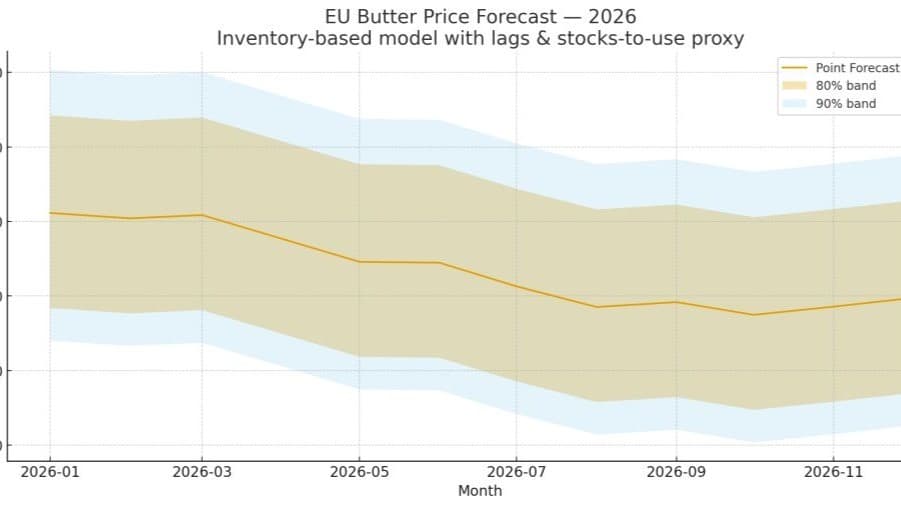
Summer Shopping or Summer Sale?
Last week was again a bit of a bearish week for the entire dairy industry. With cream prices under pressure and milk intake still strong, we keep seeing a market that has more supply than demand. Butter prices took another step lower, cheese prices cracked, and the powder market gave back a bit of its gains again.
Raport tygodniowy
Miej go, zanim trafi gdziekolwiek indziej
Każdy raport rynkowy prosto na Twoją skrzynkę, gdy tylko powstanie. Masło, ser, proszki, produkty płynne — wybierz to, czym naprawdę handlujesz.
Mniej więcej co tydzień · Bezpłatnie · Rezygnacja w każdej chwili