Bulls Have Little To Gain, Bears at Lot!

The past three trading days of this week have been hard to summarize. We continue to see a tight spot market for liquids, a slightly more bullish GDT than expected, and simultaneously, prices for butter and cheese for Q1 are trending lower. Milk volumes across Europe appear to be improving, and the arrival of products from New Zealand and Australia is starting to impact the supply and demand ratios in the EU. For powders, there has been a sharp increase in imports from Southeast Asia and China, but the strong gains of the past few days are fading again. It's hard to establish a clear trend for the entire dairy market, but let’s give it a try.
GDT Overview
First, we observed a slightly more bullish GDT than expected, with a 1.9% increase primarily driven by the strong rise in WMP. Butter showed a modest increase of 0.5%, though EU butter prices were slightly down. AMF posted a 1% increase, reaching its highest price in at least five years. Cheese prices performed worse, with Mozzarella dropping 6.6%, returning to pre-summer price levels. With the high-demand season still months away, a swift rebound in the coming GDT events is unlikely. Cheddar also performed poorly, undergoing a correction after eight consecutive gains. SMP prices rose 0.9%, marking the highest price this year. The standout performer was WMP, which posted a 3.2% increase, its highest trade in the last 30 months.
While we wouldn’t have been surprised by a small correction, the relatively modest increases in butter and SMP align with our market view. We do not anticipate these commodities continuing to post higher prices; instead, we expect them to trade steadily sideways or even slightly downward from a European perspective.
Liquids: Still Very Tight, but Expected to Loosen Soon
The spot market for liquids remains strong. Cream prices traded lower towards the end of last week for some spot loads, but today’s prices are in line with or even higher than last week. Cream prices varied widely, with the lowest reported at €10,550 and the highest at €11,300. As one of our partners suggested, "These high prices reflect low availability rather than high demand." Relatively low available volumes continue to support higher price levels, even though demand is not particularly strong. It seems this tight situation for cream may last another 2–3 weeks, making the correction on butter a highly debated move.
Raw milk and SMC prices are trading in line with last week, although some traders report signs of loosening in the market as more volumes become available.
Conversations with producers and partners in the UK and Ireland suggest that both countries expect milk supply to grow year-on-year in the coming months. Strong milk prices, combined with relatively low energy, fertilizer, and feed costs, make milk production highly profitable. The UK is on track for a 4–5% increase in milk production, which could continue to add to commodity supply. In Ireland, year-end production is expected to finish strong, while earlier forecasts were conservative. Recent increases in offers from Ireland reflect this growth.
In the Netherlands, milk collection might still be down year-on-year in headline numbers, but milk solids are now surpassing last year’s levels. If this trend continues, more pressure on the market can be expected. Meanwhile, Germany’s milk production remains weak, with no signs of recovery. However, overall, the trend in milk collections indicates that the year-on-year declines are becoming a thing of the past. With favorable conditions, 2025 could see milk growth.
Butter: Limited Room for Upside, Significant Room for Downside
"At these high prices, the upward potential is minimal, while the downward potential is significant. This makes it more attractive to anticipate a bearish market than a bullish one," said one of our partners, summarizing the current market dynamics.
Spot indicators suggest an incredibly bullish market, with cream trading above €11,000 and some butter trades exceeding €9,000 for specific needs. However, generic brands or products for delivery after December 10th are trading at much lower levels, with prices for November/December around €7,550 and Q1 prices at €7,300. Futures for Q2 have been traded as low as €6,800, more than €2,200 below the highest reported prices.
Speculators see little potential for higher prices, and history suggests that a €2,000 drop is not unrealistic. Buyers who can postpone purchases stand to gain significantly by waiting, as this allows them to assess the effects of stock-building at high prices and increased EU milk production. But buyers should not get greedy. The overall S&D in our view remains increadably bullish long term, so if a cheap opportunity gets presented, the question is, who will treat themselves to present, and who will let it walk by, hoping for something better... ?
We expect to have sellers for
| Product | Origin | Volume | Period | Price | Incoterm |
|---|---|---|---|---|---|
| Lactic Unsalted Fresh/Frozen | Irish | 88 | December | € 7650 | FCA NL |
| Sweet Cream Unsalted Frozen | Portugues | 44 | Nov-Dec | € 8000 | FCA PT |
| Sweet Cream Unsalted Frozen | Irish | 44 | Dec | € 7850 | FCA NL |
| Lactic Unsalted Fresh/Frozen | Arla DK | 88 | December | € 7750 | FCA NL |
| Lactic Unsalted Fresh/Frozen | NL/DE/BE | 66 | December | € 7750 | FCA NL |
| Lactic Unsalted Fresh/Frozen | NL/DE/BE | 132 | Q1 | € 7375 | DAP NL |
We Expect to have Buyers for
| Product | Origin | Volume | Period | Price | Incoterm |
|---|---|---|---|---|---|
| Lactic Unsalted Fresh/Frozen | Irish | 88 | December | € 7300 | FCA NL |
| Sweet Cream Unsalted Frozen | Portugues | 44 | Nov-Dec | € 7400 | FCA PT |
| Sweet Cream Unsalted Frozen | Irish | 44 | Week 49 | € 7600 | FCA NL |
| Lactic Unsalted Fresh/Frozen | Arla DK | 66 | Q1 | € 7250 | FCA NL |
| Lactic Unsalted Fresh/Frozen | NL/DE/BE | 66 | January | € 7250 | FCA NL |
| Lactic Unsalted Fresh/Frozen | NL/DE/BE | 132 | Q1 | € 7280 | FCA NL |
Cheese: Likely to Follow a Bearish Trend
The cheese market appears poised to follow the bearish trends seen in GDT and butter. UK and Irish partners report that imports of New Zealand products are affecting demand for Irish cheddar. As a result, offered prices for UK/Irish cheddar (curd) have dropped from over €5,000 to closer to €4,800.
Mozzarella prices fell sharply on GDT and are now reflecting this trend in the EU market. Q1 offers have dropped by around €100 from last week’s €4,250, and sellers are willing to negotiate at slightly over €4,100. Spot prices are unclear due to a lack of buyers. Gouda prices are similarly under pressure, with November/December offers at €4,500 and Q1 prices declining, though the absence of bids makes exact pricing uncertain. Exporters report slowing demand from Korea, Japan, and the Middle East, adding to the bearish sentiment.
We Expect to have sellers for
| Product | Origin | Volume | Period | Price | Incoterm |
|---|---|---|---|---|---|
| Gouda 48 Slicing | NL/DE | 88 | December | € 4500 | FCA NL/DE |
| Mozzarella 40% | NL/DE/BE/DK | 88 | Nov-Dec | € 4150 | FCA NL/DE/BE |
| Cheddar | UK | 44 | Dec | € 4800 | FCA UK |
| Gouda 48 Slicing | NL/DE | 132 | Q1 | € 4425 | FCA NL/DE |
| Mozzarella 40% | NL/DE/BE/DK | 66 | Q1 | € 4175 | FCA NL |
We Expect to have Buyers for
| Product | Origin | Volume | Period | Price | Incoterm |
|---|---|---|---|---|---|
| Gouda 48 Slicing | NL/DE | 88 | December | € 4200 | FCA NL/DE |
| Mozzarella 40% | NL/DE/BE/DK | 88 | Nov-Dec | € 3900 | FCA NL/DE/BE |
| Cheddar | UK | 44 | Dec | € 4500 | DAP NL |
| Gouda 48 Slicing | NL/DE | 132 | Q1 | € 4175 | FCA NL/DE |
| Mozzarella 40% | NL/DE/BE/DK | 66 | Q1 | € 3975 | FCA NL |
Powders: Too Many Bulls to Make Us Bullish
The powder market remains bullish for many partners, citing increased exports to Southeast Asia, growing Chinese demand, low stocks, and a favorable Euro/Dollar exchange rate. While these arguments are logical, the predominance of bullish sellers raises caution.
Recent weeks have seen higher prices, but recent days have brought more offers to the market, export deals lost to competitors, and futures trading lower. As with GDT prices, we expect a slowdown for EU powder prices.
Q1 prices exceeding €2,650 seem unlikely in the short term. Spot market prices above €2,600 have not been seen since November 2022, so the recent uptick represents a break in the trend.
| Product | Origin | Volume | Period | Price | Incoterm |
|---|---|---|---|---|---|
| Skimmed MIlk Powder MH | Solarec | 100 | Jan | € 2725 | FCA BE |
| SWP | Spanish | 150 | Nov-Dec | € 975 | FCA SP |
| D40 | Spanish | 200 | Dec-March | € 1025 | FCA SP |
| Skimmed Milk Powder, Fresh | Solarec | 300 | Q1 | € 2800 | FCA BE |
| SWP Monki | Polish | 100 | November | € 1025 | FCA NL |
| Skimmed Milk Powder 36% | EU | 100 | November | € 2650 | DAP NL |
We would have the following bids
| Product | Origin | Volume | Period | Price | Incoterm |
|---|---|---|---|---|---|
| FCMP BigBags | EU | 96 | January | € 4220 | FCA NL |
| Skimmed Milk Powder n 36% | EU15 | 44 | November | € 2550 | DAP NL |
| SMP BC Spec | EU | 300 | Q1 | € 2650 | DAP BE |
| FCMP | IRL | 24 | December | € 4300 | FCA NL/BE |
Final Thoughts
In the ever-dramatic world of dairy, where butter fights to stay relevant, cheese seems to have lost its groove, and powders are puffing themselves up for attention, one thing is clear: the market is as fickle as ever. The liquids are still throwing a tight squeeze party, but even they can’t keep up the act for long. Meanwhile, the GDT gave us a little bullish sparkle, only for reality to remind us that not all that glitters is gold—especially when Mozzarella prices tumble faster than your post-holiday resolutions.
As for the near future? Expect surprises, side-eyes, and the occasional "what were they thinking?" move from market players. Just like a well-aged cheddar, patience and timing are key. Let’s hope the industry balances its enthusiasm with caution because if there’s one lesson from this week, it’s that the dairy market is a lot like life—unpredictable, a little cheesy, and best enjoyed with a little help from your friends at Get Fair Dairy.
More from the desk
Our Long View Before Our Long Break 
Our Long View Before Our Long Break
Last week the market found a bit of stability. After lower trades on cheese, the cheese market traded slowly up, although a real rally remains absent. Butter prices did dip a bit further, although at the start of this week we see some strength on the back end of the curve. And on powder, our bullish feeling just doesn't go away — and now we can find some confirmation in the market as well.
Dairy Carry Has a Shelf Life 
Dairy Carry Has a Shelf Life
Last week was bearish across the board — every product we broker leaned the wrong way. Powders lost more momentum, cheese slipped well below €3,000 for some products, and butter continues to impress with just how much keeps showing up. Supply, supply, supply.
Summer Shopping or Summer Sale? 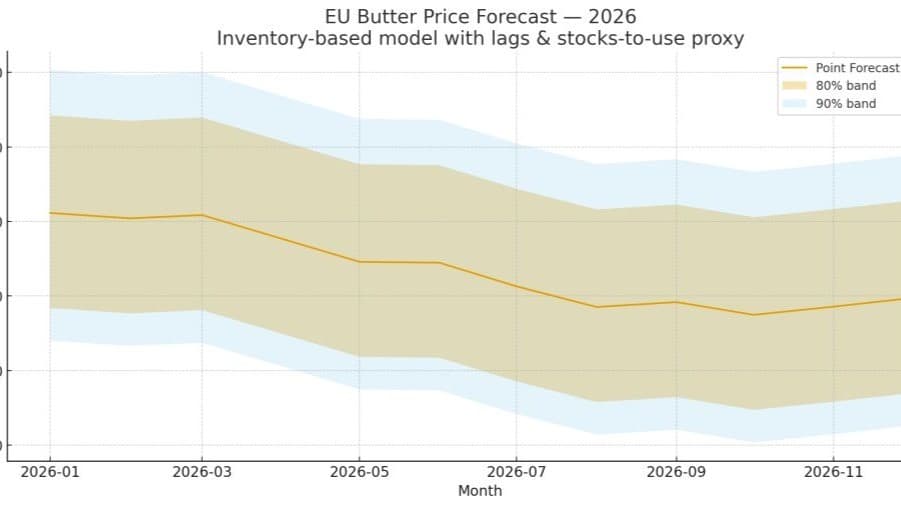
Summer Shopping or Summer Sale?
Last week was again a bit of a bearish week for the entire dairy industry. With cream prices under pressure and milk intake still strong, we keep seeing a market that has more supply than demand. Butter prices took another step lower, cheese prices cracked, and the powder market gave back a bit of its gains again.
The weekly report
Get it before it is anywhere else
Every market report, straight to your inbox the moment it is written. Butter, cheese, powder, liquids — pick what you actually trade.
Roughly weekly · Free · Unsubscribe any time